
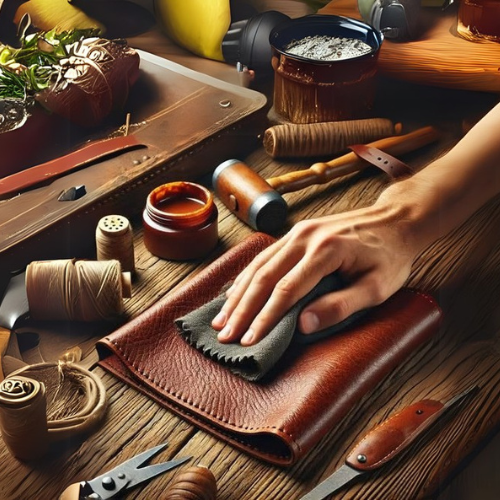
Even the toughest leather needs care! Leather is celebrated for its strength and longevity—but just like your own skin, it benefits from proper hydration and maintenance. Whether it’s a well-worn wallet, a handcrafted belt, or a keepsake bracelet, leather develops character over time—but only if it’s looked after.
Today’s Tuesday Tip is all about one of the most essential steps in leather care: conditioning.
⸻
Why Condition Leather?
After tanning, leather no longer produces its own natural oils. Without regular care, it can dry out, crack, or lose its flexibility. Conditioning restores moisture and keeps the leather soft, strong, and beautiful.
Here’s what conditioning can do:
- Rehydrate and soften dry leather
- Prevent brittleness and surface cracking
- Enhance the natural patina and deepen its character over time
- Prolong the life of your leather goods
It’s a simple habit that can make a huge difference.
⸻
How Often Should You Condition Leather?
This depends on a few factors:
- Usage: Items that are handled daily—like wallets or belts—benefit from conditioning every 3 to 6 months.
- Climate: If you live in a dry environment, you may want to condition more frequently.
- Exposure: Leather that’s regularly exposed to sun, water, or heat may need more attention.
If the leather feels stiff, looks dull, or shows signs of dryness, it’s probably time.
⸻
How to Condition Leather (Step-by-Step)
1. Choose a leather-safe conditioner. Look for natural, non-toxic options—free from petroleum or silicone. You can also find locally made or artisanal options at specialty shops or leatherworking stores.
2. Clean the surface first. Gently wipe down the leather with a dry or slightly damp cloth to remove any dirt or dust.
4. Let it absorb. Allow the leather to rest for several hours—or overnight—so the conditioner can soak in fully.
5. Buff gently.
If needed, use a clean cloth to lightly buff the surface and remove any excess product.
⸻
What About Finished Leather?
If your leather item has been treated with a finish (like Resoline), it won’t absorb conditioner as easily. In these cases, apply conditioner lightly and infrequently, focusing on spots where the finish may be thinning or worn.
⸻
Important Notes
- Always test new products on a small, hidden area first to check how the leather reacts.
- Avoid over-conditioning—once every few months is enough for most items.
- Don’t use cooking oils or household lotions—they can go rancid or leave residue.
⸻
Final Thought
Proper conditioning helps leather age gracefully, developing that soft sheen and depth that makes each piece unique. It’s a small step that goes a long way in protecting your investment—and the story your leather tells
⸻
Thanks for reading and taking the time to care for your leather pieces. Every handcrafted item holds a story—let it age with grace, and wear it with pride.
We’re so glad to have you here as part of the Tanné & Co. journey.
Got a question or a topic you’d love us to cover? Drop us a message—we’d love to hear from you.

Leave a comment
This site is protected by hCaptcha and the hCaptcha Privacy Policy and Terms of Service apply.